


Why Sports Socks Matter: Running, Basketball and Hiking Socks Explained
Blisters, sweat and fit: how the right socks improve comfort and performance, and what to look for in running, basketball and hiking socks.
Athletes obsess over shoes, but the layer between your foot and the shoe matters just as much. The wrong socks can turn a perfect shoe into a blister factory; the right ones make good shoes feel even better. This guide explains why sports socks matter and how to choose the best pair for running, basketball and hiking.
What socks actually do
- Manage moisture: feet sweat a lot during exercise. Good socks pull sweat away from the skin so it can evaporate.
- Reduce friction: a smooth, well-fitting sock stops skin from rubbing against the shoe, the main cause of blisters.
- Add cushioning: padded zones protect high-impact areas such as the heel and ball of the foot.
- Improve fit: the thickness of your sock changes how your shoe fits. The right sock helps your shoe lock in properly.
- Regulate temperature: breathable socks keep feet cooler in summer; warmer blends help in winter.
Materials: why cotton is not your friend
Everyday cotton socks absorb moisture and hold onto it, becoming heavy, soggy and abrasive. That is a recipe for blisters during sport. Performance socks are made from materials that handle sweat better:
- Synthetic fibers such as polyester and nylon wick moisture quickly, dry fast and are very durable.
- Merino wool regulates temperature, resists odor and stays comfortable when damp. It is especially popular for hiking.
- Elastane adds stretch so the sock stays in place without bunching.
Running socks
Running socks are usually thinner and lighter than other sports socks. Key features include:
- Seamless or flat toe seams to prevent rubbing.
- Arch compression that keeps the sock from sliding and adds a supportive feel.
- Targeted cushioning under the heel and forefoot, from very thin to moderate.
- Heel tabs on low-cut socks to stop them slipping down into the shoe.
Choose sock thickness to match your shoe fit. If your running shoes feel slightly roomy, a more cushioned sock can help; if they are snug, go thinner.
Basketball socks
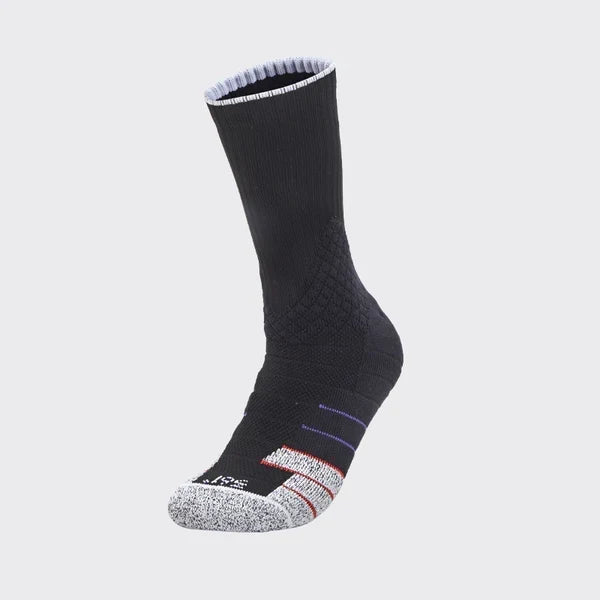
Basketball puts heavy demands on the feet: sprinting, cutting, jumping and landing. Basketball socks are usually taller and more cushioned than running socks.
- Extra cushioning under the heel and forefoot for repeated landings.
- Crew or long lengths that protect the lower leg from high collars and add a classic look.
- Secure fit that stays in place during sharp lateral moves.
- Breathable zones to manage sweat in hot gyms.
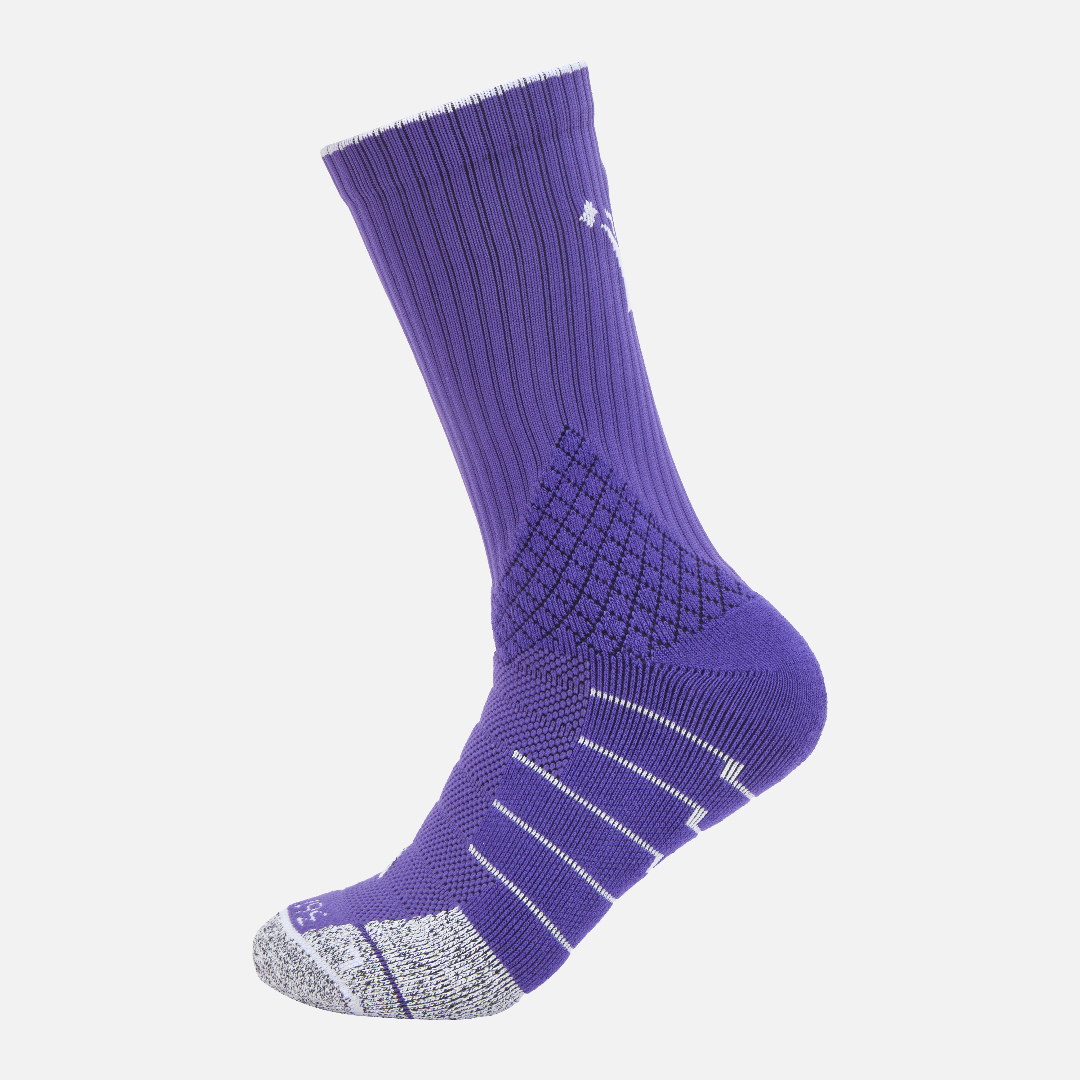
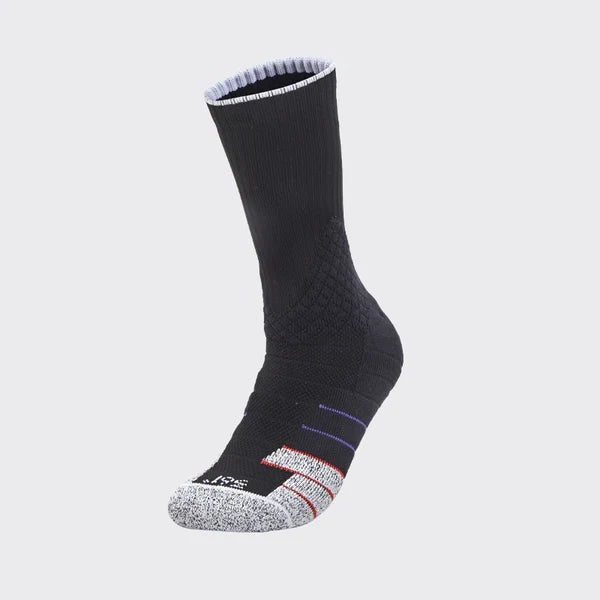
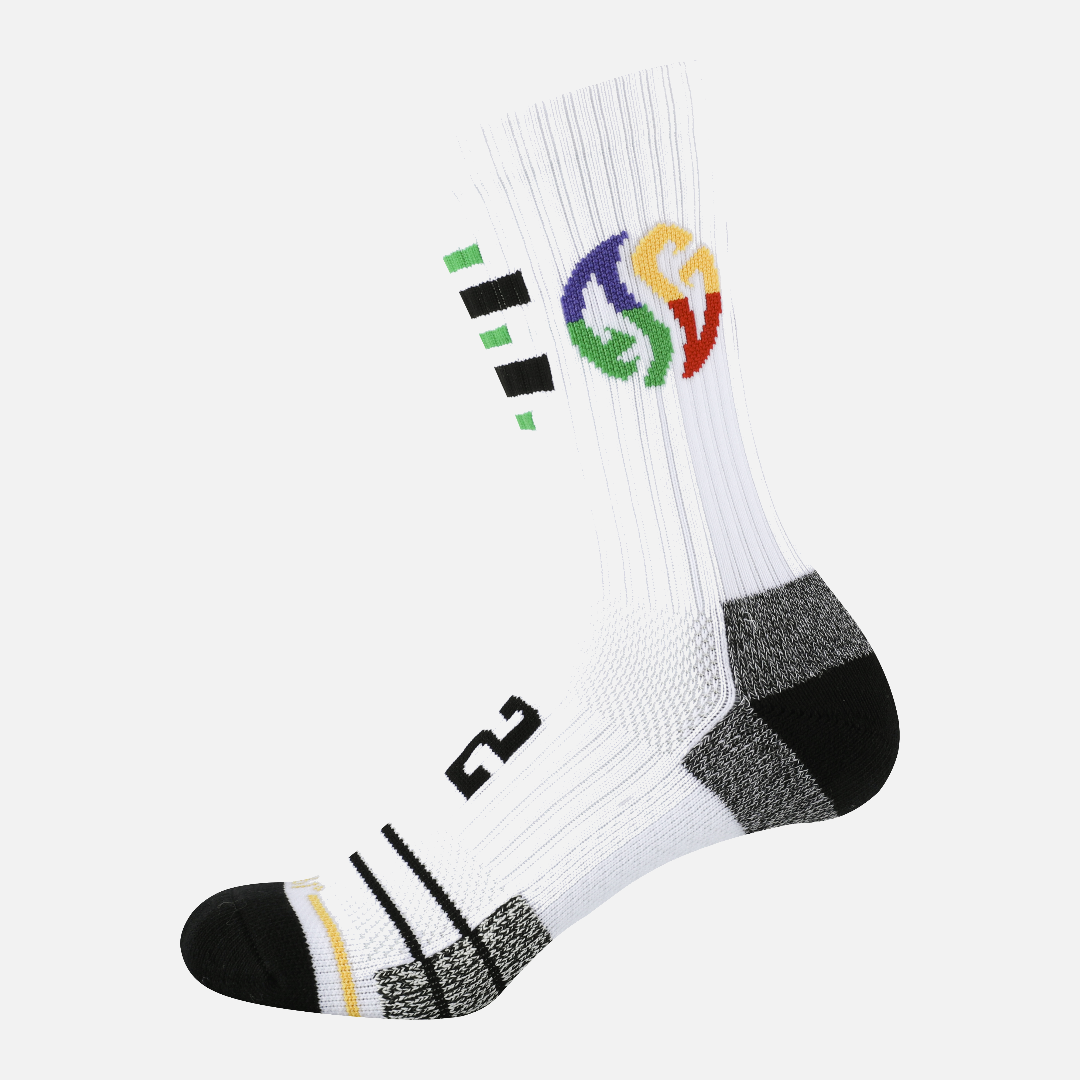
Our range includes the Nikola Jokić Basketball Long Sock in black and purple, the Aaron Gordon High Sock, the Aaron Gordon Someday Hi Sock and the Light Up Tour Pro long basketball sock. Explore them in clothing and accessories.
Hiking socks
Hiking socks need to handle long days, varied temperatures and heavier boots.
- Merino blends for temperature regulation and odor resistance.
- Medium to heavy cushioning for comfort in boots and on descents.
- Crew or taller lengths to protect against boot collars.
- Reinforced heels and toes for durability.
Pair them with the right boots using our guide to waterproof hiking boots.
Everyday and lifestyle socks
Not every sock needs to be technical. For casual wear, comfort and style lead the way. Our Famous Paintings art socks feature designs inspired by Starry Night, Mona Lisa, The Great Wave, The Scream, The Kiss, Cherub, The Birth of Venus, David and Girl with a Pearl Earring, a fun way to add personality to any outfit.
How to choose the right size
Socks that are too big bunch up and create folds that rub. Socks that are too small pull the toes down and wear through quickly. Check the size range on the product page and choose the size that matches your shoe size.
The best shoes in the world still need the right socks.
How socks affect shoe fit
Always try on shoes with the socks you plan to wear. A thick basketball sock can take up noticeable space compared with a thin running sock. If you switch to a much thicker or thinner sock, check that your shoes still fit securely. Our guide on how to measure your foot recommends measuring while wearing your usual sports socks.
Caring for sports socks
- Turn socks inside out before washing to clean the inside where sweat collects.
- Wash at moderate temperatures and avoid fabric softener, which can reduce wicking.
- Air-dry when possible to protect elastic fibers.
- Replace socks when they become thin at the heel or toes or lose their stretch.
Preventing blisters
- Wear moisture-wicking socks rather than cotton.
- Make sure socks fit smoothly without folds.
- Choose shoes that fit well and do not let your heel slip.
- Keep feet dry and change socks after sweaty sessions.
- Address hot spots early with tape or a blister plaster before they become blisters.
Frequently asked questions
Are compression socks good for running?
Some runners enjoy the snug feel of compression socks, especially for long runs or recovery. They are a personal preference rather than a requirement.
How many pairs of sports socks do I need?
Enough to wear a fresh pair for every session. Many athletes keep at least one pair per training day of the week.
Should I wear two pairs of socks to prevent blisters?
Some hikers use a thin liner under a thicker sock, but for most people a single well-fitting performance sock works best.
Shop basketball socks, caps and gear in our clothing and accessories collection. Free worldwide shipping and 14-day returns.
Sock length guide
- No-show: hidden inside the shoe, popular for casual sneakers and some runners. Look for silicone heel grips to stop slipping.
- Ankle or quarter: sits just above the shoe collar and protects the Achilles area from rubbing.
- Crew: reaches the lower calf. A classic choice for basketball, hiking and training.
- Long or knee-length: popular in basketball for style and coverage, and in compression designs.
Choose a length that sits above the collar of your shoe so the edge of the shoe never touches bare skin.
Cushioning levels explained
- Thin: maximum ground feel and breathability. Best for racing and snug-fitting shoes.
- Light: a little padding at the heel and forefoot. A versatile option for everyday training.
- Medium: noticeable cushioning for longer runs, basketball and hiking.
- Heavy: plush padding for long hikes, cold weather and heavy boots.
Match socks to the activity
| Activity | Length | Cushioning | Material |
|---|---|---|---|
| Road running | No-show to crew | Thin to light | Synthetic blend |
| Basketball | Crew to long | Medium | Synthetic blend |
| Hiking | Crew | Medium to heavy | Merino blend |
| Everyday | Any | Light | Cotton blend or synthetic |
Signs it is time for new socks
- Thin or translucent patches at the heel and toes.
- Elastic that no longer holds the sock in place.
- Persistent odor even after washing.
- Pilling or rough patches that cause friction.
Socks for travel and race weekends
When you travel for a race, a tournament or a hiking trip, pack one more pair of socks than you think you need. Fresh socks after a long flight, a muddy trail or a sweaty warm-up make a noticeable difference to comfort. Choose quick-drying synthetic or merino socks that you can rinse in a sink and dry overnight, and always race or play in socks you have already tested in training rather than a brand-new pair.
Socks as style
Socks are also one of the easiest ways to express personality. Long basketball socks from your favorite player's line show team spirit on and off the court, while art socks with famous paintings add color to everyday outfits. With so many options, it is worth having a few pairs for performance and a few for fun.
Upgrading your socks is one of the cheapest ways to make every pair of shoes feel better. Start with the activity you do most, choose the right material and cushioning, and your feet will thank you.