


How to Choose Running Shoes: The Complete Guide for Every Runner
Cushioning, stability, drop, fit and the type of running you do: everything you need to know to pick the right running shoe the first time.
Walk into any running store and you will see a wall of shoes that all promise to make you faster, more comfortable and less injury-prone. The truth is simpler: the best running shoe is the one that fits your foot, suits the running you actually do and feels comfortable from the very first step. This guide walks you through every decision, from cushioning and stability to drop, fit and sizing, so you can choose your next pair with confidence.
Start with how and where you run
Before you look at technology names or colorways, think about your running week. Are you running three easy miles a few times a week, training for a half marathon, or chasing a personal best in a 10K? Do you run mostly on pavement, on a treadmill, or on gravel paths and trails? The answers narrow your choice more than anything else.
- Easy and long runs: you want comfort and protection. A cushioned daily trainer is the backbone of most runners' rotation.
- Tempo runs and intervals: a lighter, more responsive shoe helps you change pace and feel quick.
- Races: racing shoes, often with carbon plates and high-rebound foams, are built for efficiency on race day.
- Trails: if you leave the road, you need grip, protection and a more durable upper. See our trail and hiking collection.
If you are new to running, one versatile daily trainer is all you need. Many experienced runners eventually build a rotation of two or three shoes, but that is a choice, not a requirement.
Cushioning: how much is right for you?
Cushioning is the midsole foam between your foot and the ground. It absorbs impact and shapes how the shoe feels. More cushioning generally means a softer, more protective ride; less cushioning means more ground feel and a lighter shoe.
Max cushion
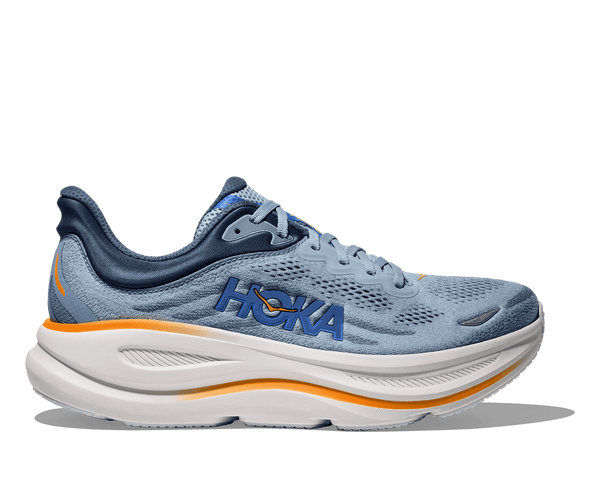
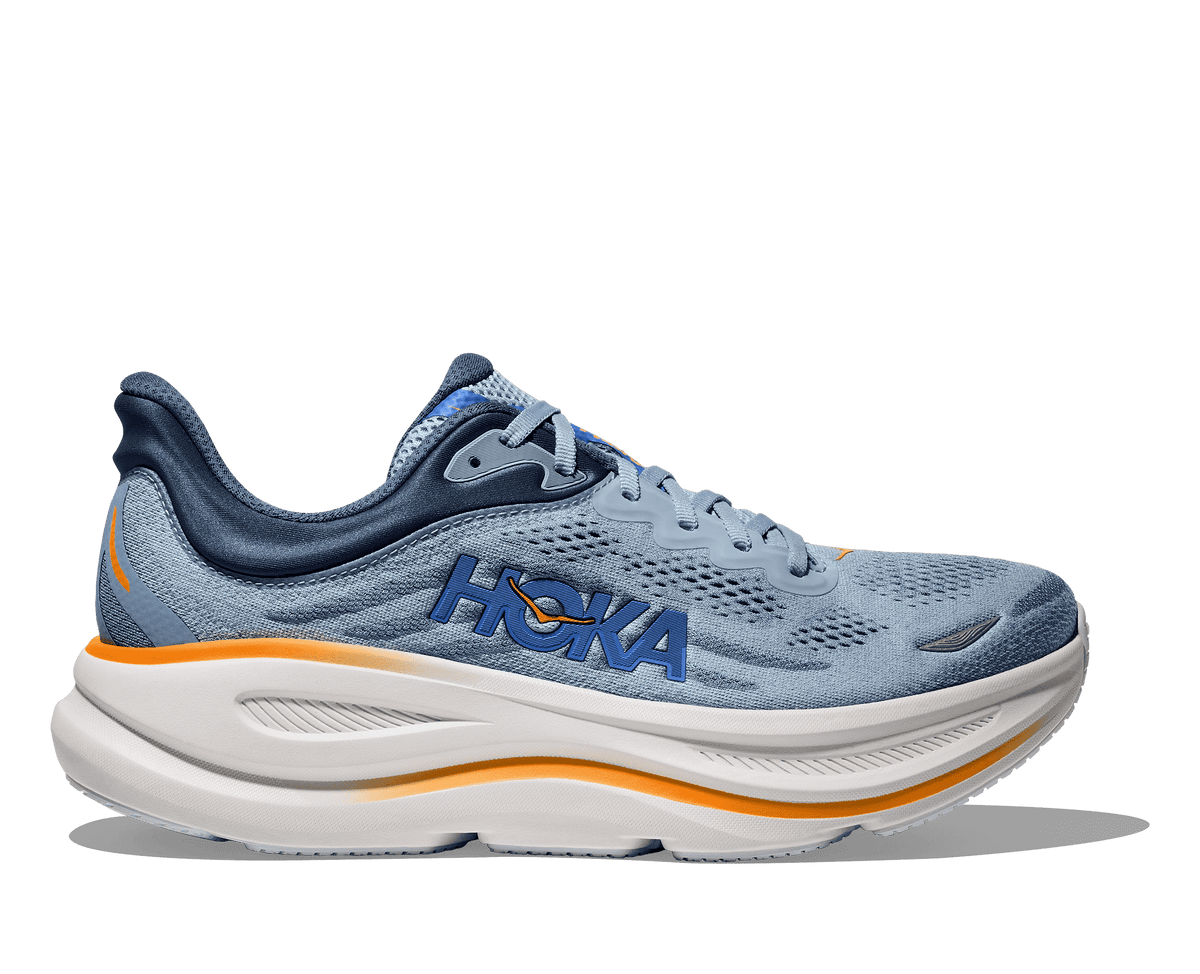
Max-cushion trainers stack a generous amount of foam under the foot. They are popular for long runs, recovery days and runners who spend a lot of time on hard surfaces. Shoes such as the HOKA Bondi 9, the Brooks Glycerin 23 and the Nike Vomero Premium sit in this category: soft, stable and comfortable mile after mile.
Balanced cushion
Most daily trainers sit in the middle. They have enough cushioning for long runs but still feel lively enough for a few faster strides. Neutral trainers like the 361° Centauri 3 and Eleos 2 are good examples of shoes you can run in most days of the week.
Low cushion
Lightweight racers and minimal shoes offer less foam and more ground feel. They can feel fast and connected, but they are usually best saved for shorter or faster sessions unless your body is adapted to them.
Neutral or stability?
When your foot lands, it naturally rolls slightly inward to absorb shock. This is called pronation, and it is completely normal. Some runners roll inward more than others, or feel that their ankles and knees collapse inward when they get tired.
- Neutral shoes do not try to correct this movement. They suit most runners, especially those who feel comfortable and stable in a standard trainer.
- Stability shoes add features such as firmer foam on the inside of the midsole, a wider base or guide rails to gently limit excessive inward roll. The 361° Kairos 4 and the 361° Phoenix 2 are stability options in our range.
A simple way to decide: if you have run comfortably in neutral shoes before without recurring aches, stay neutral. If you often feel your arches collapse, have been told you overpronate, or simply feel more secure with extra support on long runs, try a stability shoe. Comfort is the most reliable guide. We explain the difference in more detail in our article on neutral vs stability running shoes.
Understanding heel-to-toe drop
Drop is the difference in height between the heel and the forefoot of the shoe, measured in millimeters. A shoe with a 10 mm drop has a heel that sits 10 mm higher than the forefoot; a zero-drop shoe keeps them level.
- Higher drop (8–12 mm) can feel natural for heel strikers and may take some load off the calves and Achilles.
- Lower drop (0–6 mm) encourages a midfoot landing and puts more work on the calves and feet.
If you are switching to a much lower drop than you are used to, do it gradually. Mix the new shoe into your week a little at a time so your calves and Achilles can adapt.
Weight, responsiveness and plates
Lighter shoes feel quicker, but weight is only one part of the story. Modern foams can be both light and protective, and many faster shoes now include a stiff plate, often made of carbon fiber, embedded in the midsole. Plates make the shoe stiffer through the forefoot and work with springy foams to create a propulsive feeling at faster paces.
Carbon plate shoes such as the 361° Flame 5 are designed for race day and fast workouts. They can feel unstable at slow paces for some runners, so most people keep them for key sessions and races rather than every easy run. Read more in our guide to carbon plate running shoes.
Getting the fit right
A perfectly cushioned shoe will still cause problems if it does not fit. Use these checkpoints every time you try on a running shoe:
- Length: leave roughly a thumb's width (about 1 cm) between your longest toe and the end of the shoe. Feet swell during runs, and you need room for that.
- Width: the shoe should hold the midfoot securely without squeezing. Your toes should be able to spread naturally. If you have wide feet, look for wide versions such as the 361° Kairos 4 Wide.
- Heel: your heel should stay put when you walk and jog. Slight movement is normal; obvious slipping is not.
- Upper: check for seams or overlays that rub, especially around the little toe and the top of the foot.
Always try shoes with the socks you run in, ideally later in the day when your feet are slightly larger.
How to find your size online
Sizing varies between brands and even between models from the same brand, so your usual size is a starting point rather than a guarantee. The most reliable method is to measure your foot length in centimeters and compare it with a size chart.
Our size guide explains how to measure your foot at home with a sheet of paper and a ruler, and every product page has a size chart comparing foot length with EU and US sizes. If you are between two sizes, choose the larger one. And if you are still unsure, email our team with the model and your foot length and we will help you choose.
When to replace your running shoes
Midsole foam gradually loses its cushioning and responsiveness. Most running shoes last somewhere between 500 and 800 kilometers (about 300 to 500 miles), depending on the foam, your weight, your running style and the surfaces you run on. Signs it is time for a new pair include a flat, dead feeling underfoot, visible creasing in the midsole, worn-through outsole rubber and new aches after runs that used to feel easy. We cover this in detail in how often to replace running shoes.
Building a simple rotation
Once you are running regularly, two pairs can be better than one. Alternating shoes lets the foam recover between runs and gives your legs slightly different stimuli. A popular combination is one cushioned daily trainer for most runs and one lighter or plated shoe for faster sessions. If you also run off-road, add a trail shoe for those days.
The best running shoe is the one you forget about while you run.
Quick checklist before you buy
- What type of running will this shoe be used for most?
- Do you prefer a soft, max-cushion ride or a lighter, more responsive feel?
- Do you feel comfortable in neutral shoes, or do you want extra stability?
- Have you measured your foot length and checked the size chart?
- Do you need a wide fit?
Frequently asked questions
Should I buy running shoes a size bigger?
Many runners need a half size larger in running shoes than in everyday shoes, because feet swell during runs and you need room at the toes. Measure your foot and follow the size chart rather than guessing.
Can I use running shoes for the gym?
Running shoes are fine for treadmill work and light gym sessions, but their soft, high midsoles are not ideal for heavy lifting or lateral movements. A flatter, more stable training shoe works better for those.
Are expensive running shoes always better?
Not necessarily. Premium shoes often use newer foams or plates, but the right shoe is the one that matches your running and fits well. A well-fitting daily trainer will serve most runners better than an ill-fitting premium racer.
How long does it take to break in running shoes?
Most modern running shoes feel good straight out of the box. If a shoe is uncomfortable on your first few runs, it is usually a fit issue rather than something that will improve with time.
Ready to find your pair? Explore all running shoes, or go straight to men's and women's running shoes. Every order ships free worldwide, with returns and size exchanges available within 14 days of delivery.